
Agriculture Can Become One of the Greatest Tools for Economic Empowerment if Approached Strategically
Agriculture Can Become One of the Greatest Tools for Economic Empowerment if Approached Strategically

Felix Owiti
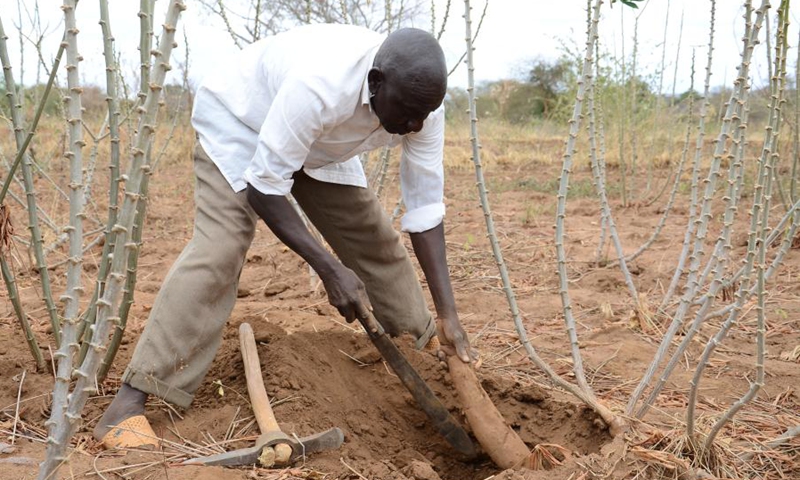
Every community has a story that defines its identity, and for the people of LESSO, agriculture is deeply woven into that story. Long before titles, professions, and modern opportunities emerged among us, the soil was our first classroom, and farming was our first economy. Many of us were raised through the sacrifices of parents and guardians who depended entirely on small-scale agriculture to sustain their households. We remember our mothers carrying cassava to Holo market before sunrise, hoping that the day’s sales would provide enough money for salt, soap, exercise books, or school fees. We remember walking barefoot to school along rough village paths, sometimes in the cold morning dew, and, at times, encountering wild animals such as leopards on our way to early-morning classes. Those experiences were not merely hardships; they were lessons in resilience, discipline, and survival.
Equally unforgettable are the sacrifices made by our parents and grandparents. Many families sold cows, goats, sheep, and chickens to educate their children. Livestock was not simply wealth; it was the community’s savings account, insurance policy, and emergency fund. When a child needed school fees, a goat was sold. When medical bills arose, a cow left the homestead. Agriculture, therefore, became the silent engine that carried families forward, even in seasons of drought and uncertainty. Because of this history, we cannot talk about development in our community without acknowledging the foundational role agriculture has played in preserving livelihoods, dignity, and community identity.
Yet, despite agriculture sustaining generations, many of our farming practices have remained largely traditional and subsistence-oriented. While those methods helped us survive, the demands of the modern economy require a more strategic approach. Population growth, changing weather patterns, shrinking land sizes, and rising market demands now call for a transformation in the way we think about farming. Empirical evidence now suggests that agriculture can no longer be viewed merely as a means of survival; it must now be approached as a business, a science, and a long-term economic strategy capable of creating wealth and empowering families.
The Untapped Potential Within Our Community
One of the greatest ironies in many rural communities is that people often sit on enormous agricultural potential without fully realizing its value. Our lands are fertile, our people are hardworking, and our agricultural heritage is rich. However, productivity remains low because many farmers still rely on outdated practices, poor planning, and limited technical knowledge. As a result, yields remain inconsistent, post-harvest losses are high, and many households continue to struggle financially despite investing enormous effort into farming activities.
This is where strategic agriculture becomes important. When approached properly, agriculture can create employment opportunities for our youth, increase household incomes, strengthen food security, and stimulate local economic growth. Modern agriculture is no longer about simply planting crops and waiting for rain. It involves understanding soil health, understanding weather patterns, selecting suitable crop varieties, using certified seeds, practicing proper crop husbandry, utilizing modern irrigation methods, and accessing reliable markets. Communities that embrace these principles are often able to transform farming from a subsistence activity into a profitable enterprise.
For example, soil testing remains a largely unfamiliar concept in many rural communities, yet it is one of the most important foundations of productive agriculture. Our parents continue to plant the same crops on the same piece of land year after year without understanding the nutrient composition of their soils. Consequently, crops perform poorly, not necessarily because the land is infertile, but because the soil lacks specific nutrients required for optimal growth. Strategic agriculture demands that we begin treating our farms scientifically. Before planting, farmers should know what their soil requires, what crops are best suited for particular areas, and what fertilizers or organic inputs are necessary to restore soil health. Such knowledge can significantly increase yields while reducing unnecessary costs.
At the same time, sustainable land use practices must become part of our agricultural culture. Soil erosion, overgrazing, deforestation, and poor land management continue to threaten long-term productivity. Unfortunately, sustainable farming practices are still alien concepts to many members of our community. Yet sustainability is not a luxury; it is a necessity for future generations. Terracing, agroforestry, crop rotation, water conservation, and controlled grazing are practices that can preserve the productivity of our land while ensuring that our grandchildren inherit fertile and usable farms. Without sustainability, even the most fertile land eventually becomes exhausted.
The Importance of Knowledge and Agricultural Guidance
No economy grows without access to knowledge, and agriculture is no exception. One of the biggest gaps facing many farming communities today is the lack of accessible agricultural advisory services. There is a need for reliable information from trained experts who understand both traditional realities and modern agricultural science. Communities require agricultural officers, extension workers, veterinary experts, and experienced practitioners who can guide farmers on best practices.
There is a powerful difference between farming through guesswork and farming through informed decision-making. A farmer who understands disease prevention in livestock will lose fewer animals. A farmer who understands spacing, seed selection, and pest control will harvest more produce. Similarly, a community that understands market trends can grow crops not merely for consumption but also for commercial profitability. Knowledge transforms agriculture from labour-intensive survival into strategic wealth creation.
Furthermore, the youth must be intentionally brought back into agriculture, not as reluctant participants but as innovators and entrepreneurs. For many young people, agriculture has unfairly been associated with poverty because they witnessed their parents struggle under difficult conditions. However, modern agriculture presents entirely different possibilities. Technology, mechanization, greenhouse farming, poultry production, fish farming, dairy management, and agribusiness value chains now offer profitable opportunities that can employ educated and skilled young people.
Imagine a future where LESSO youth use mobile applications to monitor market prices, apply digital solutions to irrigation systems, or establish cooperative agribusiness enterprises that process and package local produce for wider markets. Such transformation is possible if agriculture is approached strategically and supported collectively. Rather than abandoning agriculture, the younger generation should modernize it.
Turning Agriculture into Economic Empowerment
Economic empowerment begins when communities move from surviving to thriving. Agriculture has the unique ability to drive this transformation because it directly touches nearly every LESSO household. Unlike industries that may require massive capital investment, agriculture already exists within our community structure. The challenge is not introducing agriculture; the challenge is improving it.
Strategic agriculture requires organization, training, collaboration, and long-term planning. Our small-scale farmers should be encouraged and assisted to form cooperatives that can negotiate better prices, access farm inputs collectively, and connect directly with larger markets. Financial literacy and agribusiness training should be integrated into community development conversations. Equally important, local leaders and professionals who have gained education and exposure must return to guide and support grassroots agricultural transformation.
Most importantly, we must change our mindset about farming. Agriculture should no longer be viewed as the occupation of the poor or the uneducated. It is one of the most powerful economic sectors in the world and remains the backbone of many successful economies. Our history proves that peasant farming sustained us through difficult times. It educated children, fed families, and preserved dignity when opportunities were scarce. Now, with better knowledge, technology, and strategic planning, it can do even more.
The story of our community has always been connected to the land. From the cassava sold at Holo market to the livestock sacrificed for school fees, our small-scale agriculture carried the dreams of many families. Today, we stand at another important moment in our history. We can either continue practicing agriculture as we inherited it, or we can strategically transform it into a tool for lasting economic empowerment. If we embrace modern farming practices, invest in knowledge, protect our land, and support one another collectively, agriculture will not merely remain our heritage; it will become the foundation of our future prosperity.