Building the Future of LESSO: Why the Youth Must be at the Center of Our Vision
Building the Future of LESSO: Why the Youth Must be at the Center of Our Vision

Felix Owiti
Every strong and visionary community eventually arrives at a defining crossroads —a moment when it must intentionally determine the kind of future it desires to create for generations yet unborn. For LESSO, that defining moment has undoubtedly arrived. As families continue to invest in education and social development for their children, an increasingly important question continues to emerge in community conversations: what legacy are we preparing for the next generation? More importantly, are we building a future that empowers young people to inherit a stronger, safer, and more united community than the one we know today? The answer to these questions lies in one unavoidable truth: the future of LESSO will largely be shaped by how deliberately the community invests in its youth today.
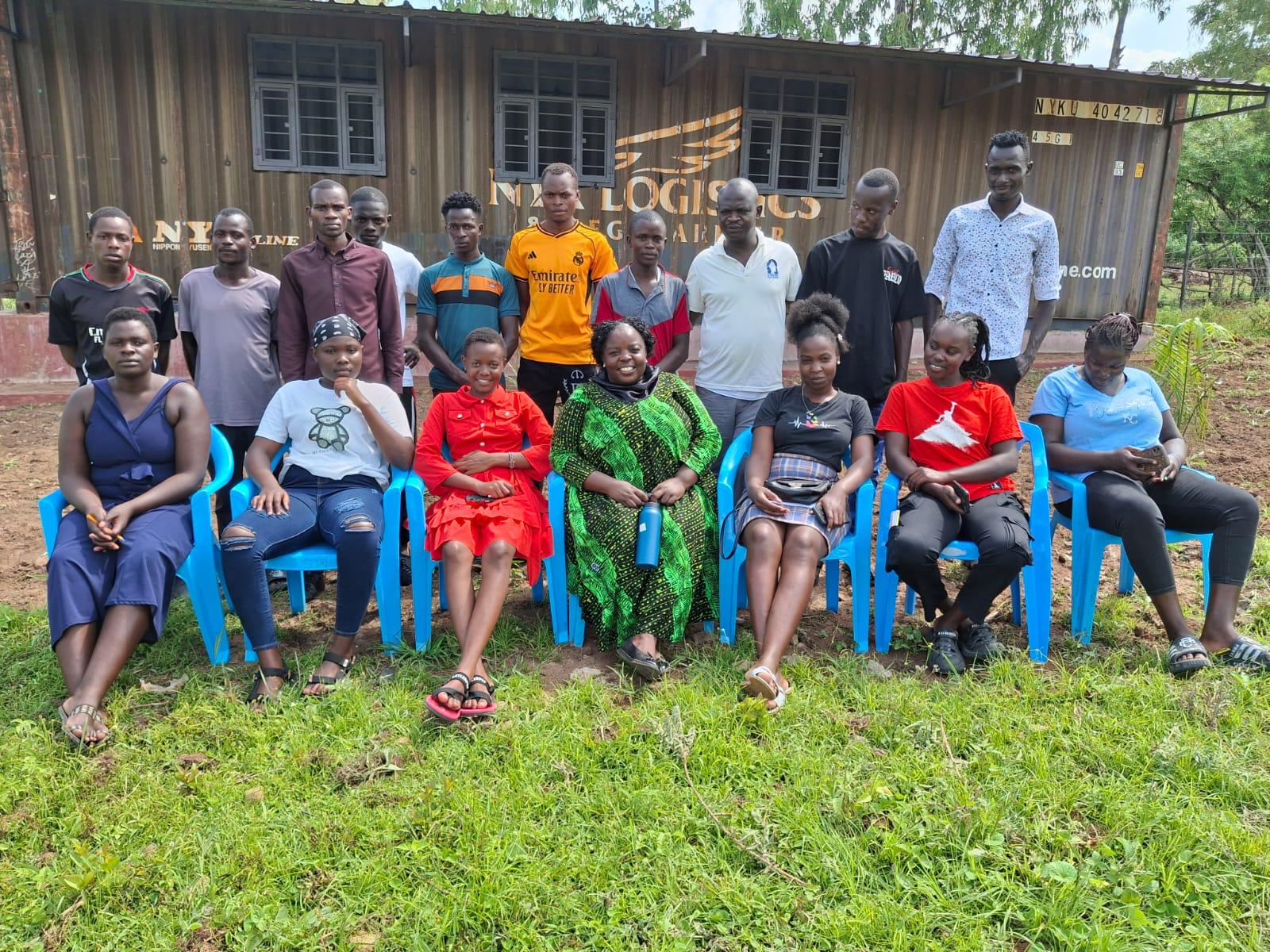
The meetings with the youth two weeks ago, therefore, represented far more than ordinary gatherings. They symbolized a turning point in the community’s collective thinking. Across the speeches, discussions, and consultations, one message consistently resonated among leaders, families, church representatives, and young people themselves — the youth are not merely passive observers in the progress of LESSO. Rather, they are central stakeholders in shaping its future destiny. Their creativity, resilience, innovation, ambition, and energy position them as one of the community’s greatest untapped resources. Nevertheless, potential alone is never enough. For young people to fully flourish, they require intentional mentorship, access to opportunities, structured support systems, and a community that genuinely believes in their capacity to lead. Consequently, the call for stronger youth partnership within LESSO is no longer optional; it has become an urgent necessity.
Security as the Foundation of Sustainable Development
One of the most significant issues highlighted during the discussions was the question of security. Community members overwhelmingly recognized that no meaningful development can thrive in an environment where insecurity prevails. Indeed, security forms the very foundation upon which all social and economic progress must stand. Without safety and stability, businesses struggle to grow, educational achievement becomes difficult, families live in fear, and trust within neighbourhoods gradually erodes.
However, the conversations demonstrated that security must be understood beyond the narrow lens of crime prevention alone. True community security entails creating an environment where children can study peacefully, investors and entrepreneurs can pursue economic opportunities with confidence, and families can coexist harmoniously without fear or uncertainty. It involves cultivating social trust, collective responsibility, and stronger community relationships. In this regard, the youth themselves must become active participants in building safer neighbourhoods through civic engagement, mentorship, positive leadership, and responsible citizenship. A secure community ultimately becomes fertile ground for innovation, education, investment, and long-term prosperity.
Education: The Greatest Investment a Community Can Make
Closely connected to the issue of security was another powerful theme that emerged repeatedly throughout the discussions: the transformative power of education. Community members strongly emphasized the urgent need for establishing a modern Community Learning and Resource Centre specifically designed to empower young people academically, socially, and professionally. This proposal reflects a growing recognition that in today’s rapidly evolving world, access to information, technology, and educational support is no longer a luxury reserved for a few. Rather, it is an essential requirement for meaningful participation in society.
The envisioned centre would include a library, digital learning facilities, reliable internet connectivity, mentorship initiatives, leadership development programs, career guidance services, and collaborative study spaces for students. More importantly, it was envisioned that the centre would become a sanctuary of opportunity — a safe and inspiring environment where young people can learn, innovate, exchange ideas, prepare for careers, and cultivate leadership skills capable of transforming both their lives and the wider community.
For many families, such a facility would bridge the widening gap between talent and opportunity. Many gifted young people possess immense potential but lack adequate access to educational resources, mentorship, or technological tools necessary to compete effectively in a modern knowledge-driven economy. Therefore, investing in such a centre is not simply an educational initiative; it is a strategic investment in the long-term future of LESSO itself.
Integrating Intellectual and Spiritual Development
Another particularly significant proposal that emerged during the meetings was the recommendation to incorporate a Seminary and Institute (S&I) model within the proposed learning resource centre. This model seeks to nurture not only intellectual growth but also moral and spiritual development. Leaders and church representatives present strongly affirmed that true education must go beyond academic achievement alone. While professional success remains important, communities also require young leaders who are grounded in integrity, discipline, responsibility, and strong moral values.
The proposed S&I approach would therefore create a holistic learning environment in which young people can strengthen their character, receive mentorship from positive role models, develop leadership principles grounded in ethical values, and cultivate a deeper sense of purpose and responsibility. Such an approach recognizes an important reality facing today’s youth: many are navigating enormous social, economic, technological, and moral pressures that can easily derail their future if left unsupported.
The growing willingness of faith-based institutions to support youth-centered initiatives within LESSO is, therefore, both timely and commendable. This partnership reflects an understanding that communities flourish when educational advancement is reinforced by strong moral foundations. Indeed, societies become stronger when young people are equipped not only with knowledge and technical skills but also with compassion, integrity, wisdom, and a commitment to service. In this sense, the proposed collaboration between community leadership and church partners represents an investment in building responsible citizens and transformative future leaders.
The Importance of Homegrown Solutions
Equally important throughout the discussions was the growing emphasis on the power of homegrown solutions. Community leaders, youth representatives, and church partners repeatedly stressed that many of the solutions to LESSO’s challenges already exist within the community itself. The talents, expertise, experiences, and goodwill needed to transform the association can be found among its professionals, educators, entrepreneurs, faith leaders, and young people.
Consequently, there is increasing recognition that sustainable progress cannot depend entirely on external intervention. Rather, meaningful transformation begins when communities take ownership of their own future. This belief has strengthened calls for greater volunteerism, youth involvement in decision-making processes, leadership development initiatives, mentorship programs, transparency, accountability, and stronger social cohesion across the association.
Such an approach is both practical and empowering. When people actively participate in solving their own challenges, they develop a stronger sense of belonging, responsibility, and collective purpose. Moreover, homegrown solutions are often more sustainable because they emerge directly from the realities, values, and aspirations of the community itself. LESSO therefore stands at an important moment where unity, participation, and shared responsibility can become powerful drivers of long-term development.
A Future Worth Building Together
As LESSO continues to evolve, the responsibility before the association is becoming increasingly clear. The future of the community will not ultimately be secured by vision statements or development pillars alone. Rather, it will be secured through people — especially young people who are empowered, educated, mentored, disciplined, and prepared to assume leadership responsibilities in the years ahead.
The dream of a secure, educated, organized, innovative, and united LESSO is not beyond reach. It is entirely achievable if the community remains committed to collective action, strategic investment, and long-term vision. Nevertheless, realizing this dream will require sacrifice, collaboration, intentional leadership, and sustained partnership among families, community leaders, faith institutions, and the youth themselves.
Above all, it will require a community willing to invest boldly in its young people today so that future generations may inherit something far greater tomorrow. History consistently demonstrates that when communities uplift their youth, they ultimately uplift their own future. Indeed, by placing young people at the centre of its vision, LESSO is not merely preparing for tomorrow — it is actively building a stronger, safer, and more prosperous future for generations to come!